
Acrylic Foam Tape DN1601G, 1.6 mm Double Sided Mounting Tape for Metal, Glass and Painted Surfaces
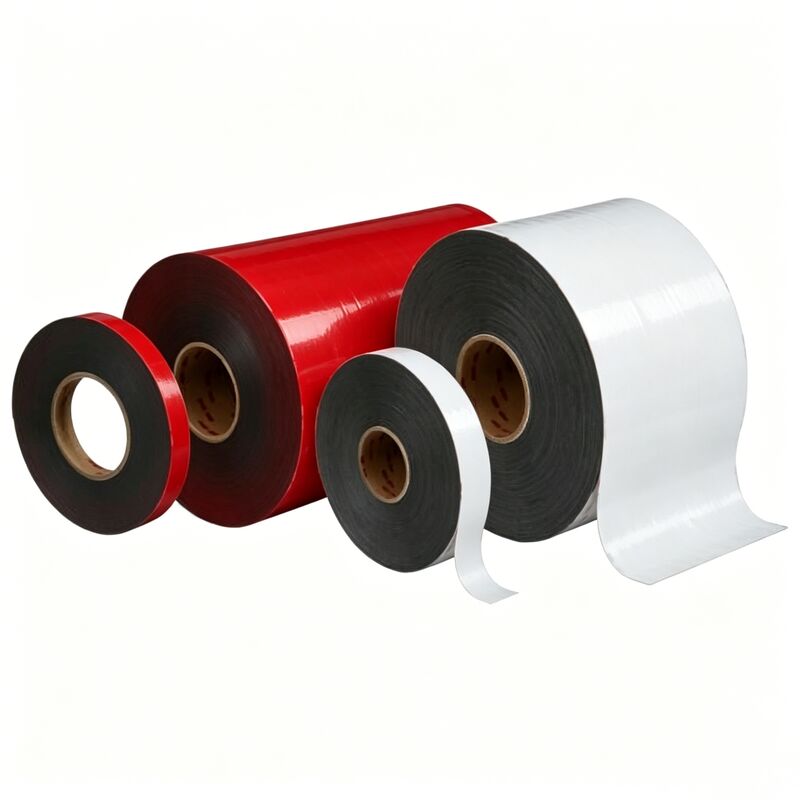
DN1601G is a double sided mounting tape built from closed cell acrylic foam. The closed cell structure is what separates it from an ordinary foam carrier tape. Each cell is sealed off from its neighbours, so the foam does not wick water, and the tape can hold a seal as well as a bond. On top of that it gives the joint a compressible layer that takes up shock, absorbs continuous vibration and keeps working after years of temperature cycling.
The measured thickness is 1.6 mm with the liner removed. That figure is worth paying attention to during design, because it sets the gap the tape is meant to fill and the amount of movement the joint can absorb.
Where a 1.6 mm thickness fits
Thickness is not a quality grade. It is a fit dimension, and 1.6 mm suits a particular set of conditions.
| Condition | Why 1.6 mm suits it |
| Surfaces that are not perfectly flat | The foam compresses over coating texture, weld seams and panel bow, so contact is made across the whole bond area instead of only on the high spots |
| Visible gaps between parts | A thicker core bridges a wider joint without leaving a void that collects dirt or moisture |
| Parts that expand at different rates | More foam thickness means more capacity to take up differential thermal movement between, say, an aluminium panel and a steel frame |
| Shock and vibration in service | A thicker core dissipates more energy before it reaches the adhesive interface |
| Thinner grades are being considered | Below about 1.0 mm the tape follows the substrate rather than filling it, which is the right choice for tight, flat, close fitting joints |
KHJ also supplies DN1101B at 1.10 ± 0.11 mm. Choose that one when the joint is flat and close fitting and a thinner bond line is preferred. Choose DN1601G when the assembly needs gap filling, vibration damping, or both.
Construction
- Closed cell acrylic foam core. Carries the load, absorbs movement and forms the seal. The cell walls are continuous, so moisture does not travel through the thickness.
- Acrylic pressure sensitive adhesive on both faces. Bonds to metal, glass, painted surfaces and certain plastics, with high initial tack so parts stay where they are placed.
- Release liner. Removed before bonding. The 1.6 mm figure applies to the tape after the liner comes off.
Technical data
| Test item | Test value | Test method |
| Total thickness (Liner removed) | 1.6 mm | Micrometers |
| 90° Peel strength to steel (20min) | 24 N/cm | GB/T2792-2014 |
| Static Shear Strength (24mm*24mm, 23℃, 1000g) | 10000 mins | GB/T4851-2014 |
| Temperature Resistance (℃) | Short term 150, Long term 93 |
What the test values tell you
| Value | Reading |
| 1.6 mm, liner removed | The working thickness in the joint. Plan your groove, step or panel offset against this number, not against the roll thickness including the liner. |
| 24 N/cm at 90 degrees after 20 minutes | Pulled at a right angle to the steel panel, which is closer to how a trim edge loads a bond than a folded back 180 degree test. Converted, that is 60 N per 25 mm of width. The 20 minute reading tells you the joint reaches working strength fast, so assemblies do not need long clamping or fixture time. |
| 10000 mins static shear | A 24 by 24 mm patch held a 1000 g load at 23 ℃ for over 166 hours, just under seven days, without creeping. This is the value to look at when a part hangs under its own weight in service. |
| 150 ℃ short term | Covers brief exposure to high heat, for example near a lamp housing, an engine bay soak or a short pass through a heated process. Sustained excursions above this figure need to be assessed for your cycle. |
| 93 ℃ long term | Continuous service temperature. Most outdoor signage, building facades, lift cars and PV frames operate well inside this limit. |
Performance characteristics
| Characteristic | What it means in production and in service |
| High initial tack | Parts hold position as soon as they are placed, which cuts fixture time and lets the next station handle the assembly quickly |
| Shock absorption and cushioning | The core takes impact loads that would otherwise be transferred into the adhesive line or the substrate |
| Waterproof closed cell structure | The bond line acts as its own gasket, keeping water and dust out of the joint |
| Static and dynamic stress resistance | Holds under a standing load and under repeated movement, which is why it survives transport vibration and thermal cycling |
| Aging, UV, moisture and solvent resistance | The acrylic chemistry does not embrittle or break down under outdoor exposure the way rubber based foam adhesives do |
| Wide temperature window | One grade covers cold chain assembly through to continuous service at 93 ℃ |
Applications
| Industry | Typical bonded parts | Why DN1601G |
| Automotive | Body side mouldings, exterior trim, nameplates, emblems, door sill plates, interior panel stiffeners | Damps road vibration, fills the gap behind curved trim, holds through temperature cycling |
| Electronics | Housings, control panels, display frames, stiffener to panel bonding | Insulates the bond line from shock, no fastener heads inside a tight enclosure |
| Advertising | Channel letters, acrylic and aluminium composite panels, light box frames, display stands | Invisible bond line, no drilling through faces, survives outdoor UV and rain |
| Hardware manufacturing | Metal panels, brackets, nameplates, appliance housings | Replaces spot welds and screws on light to medium assemblies, no finishing work afterwards |
| Construction | Curtain wall components, window and door frame assembly, metal decorative trim | Takes up movement between dissimilar materials, seals the joint |
| Solar PV | Frame bonding, junction box mounting, panel to rail assembly | Long term UV and moisture resistance under continuous outdoor load |
| Elevator | Reinforcement ribs on car panels, decorative panel bonding, door skin assembly | Cushions the constant low level vibration of a moving car |
On suitable substrates, and with a bond area sized for the load, DN1601G replaces rivets, screws and spot welds. That removes the drilling, the weld spatter, the grinding and the refinishing.
Bonding procedure
Before. Confirm both surfaces are clean, dry and free of oil, grease and release agents. Wipe with isopropyl alcohol or a silicone free cleaner and a lint free cloth. Let the solvent flash off. Bring the tape and the substrates into the 20 ℃ to 40 ℃ (68 °F to 104 °F) range before you start, and do not apply below 10 ℃, where the adhesive is too stiff to wet the surface.
During. Remove the liner, place the tape, then apply firm and even pressure across the whole bond area with a roller or a squeegee. Work from one end so air is pushed out rather than trapped. Pressure is what converts tack into contact area, so this step decides the final strength more than anything else.
After. Adhesive strength develops over time. Keep the assembly out of full load immediately after bonding, and keep it away from heat sources and open flames throughout handling and storage.
Storage and shelf life
| Item | Condition |
| Shelf life | 12 months from the date of manufacture |
| Packaging | Stored in initial packing |
| Optimal storage temperature | 21 ℃ |
| Optimal relative humidity | 50% RH |
Ordering and technical support
DN1601G is RoHS certified and manufactured by KHJ in Shenzhen, China. Send us the two substrates, the bond area, the expected load and the service temperature, and we will confirm whether 1.6 mm is the right thickness for the joint or whether a thinner grade such as DN1101B fits better. Minimum order quantity and converted formats, including slit widths and die cut shapes, are confirmed against your drawing.
FAQ
Is the 1.6 mm measured with or without the liner? Without. The datasheet records total thickness with the liner removed, so 1.6 mm is the thickness that ends up in your joint.
How strong is 24 N/cm in units I use? One centimetre of tape width holds 24 N. Over a 25 mm width that is 60 N. Bond strength scales with the bonded area, so a wider tape or a longer bond line carries more load.
Should I choose DN1601G or DN1101B? Both are acrylic foam tapes with RoHS certification. DN1101B is 1.10 ± 0.11 mm and suits flat, close fitting joints where a thin bond line is preferred. DN1601G is 1.6 mm and suits joints with visible gaps, curved or uneven surfaces, and assemblies that see vibration. If the two panels meet cleanly with no gap, the thinner grade usually gives a stiffer joint.
Will it bond to polypropylene or polyethylene? DN1601G is specified for metal, glass, painted surfaces and certain plastics. Untreated PP and PE are low surface energy materials and normally need a primer or a different grade. Tell us the exact material and we will advise.
Can it replace welding on a load bearing assembly? It replaces mechanical fasteners on light to medium assemblies where the bond area is sized correctly for the load and the failure mode is shear or tension rather than a peeling edge. For structural loads, size the joint with us rather than from the datasheet alone.
What does the 150 ℃ short term rating cover? Brief heat exposure, not continuous operation. Continuous service is rated at 93 ℃. If your process has a peak above 150 ℃, for example a high temperature paint bake, send us the full time and temperature profile so we can check it before you commit.
Can we get it slit to width or die cut? Slitting and die cutting can be discussed against your drawing and volume. Contact our team with the format you need.
Request a sample
Send your substrate pair, bond area and load requirement to sales@khj.cn. We will confirm the grade, or tell you if a different thickness fits the joint better.
SEO metadata
Page title (59 characters) Acrylic Foam Tape DN1601G, 1.6mm Double Sided Mounting Tape
Meta description (153 characters) DN1601G acrylic foam tape, 1.6 mm. 90 degree peel 24 N/cm, static shear 10000 min, 150 C short term, 93 C continuous. RoHS. Metal, glass, painted panels.
URL slug acrylic-foam-tape-dn1601g-double-sided-mounting-tape-1-6mm
Primary keywords acrylic foam tape DN1601G, 1.6mm acrylic foam tape, double sided mounting tape
Secondary keywords acrylic foam tape for metal and glass, 1.6 mm Alternative tape, vibration damping mounting tape, elevator panel bonding tape
Alternative titles
Acrylic Foam Tape DN1601G | 1.6mm Double Sided Mounting Tape1.6mm Acrylic Foam Tape DN1601G for Metal, Glass & Painted PanelsDN1601G Acrylic Foam Tape | 1.6mm Double Sided Mounting, RoHS
Alternative CTAs
Send us both substrates and the load. We will size the bond area for you.Not sure between 1.1 mm and 1.6 mm? Ask for both samples and test them side by side.Ask for the datasheet and a slit sample in your width.
Need this tape for your line?
Tell us the substrate, the peak temperature and what has to happen after removal — we will confirm a construction and send samples.
- Free samples for evaluation
- TDS and test data on request
- Reply within one business day
HOT TOPIC
-
772
Acrylic Foam Tape
conductive cloth die cutting
Die-Cut
die cutting tape
Double Sided Foam Tape
EMI shielding gasket
foam die cutting
Foam Tape
graphite die cutting
heat restrant tape
heat sink die cutting
high temperature tape
kapton tape
khj
Labels
LCD buffer pad
LCD shielding
L foam
Non-silicone Polyimide Tape
PCB
PI tape
polyimide tape
polyimide tape,kapton tape
precision die cutting
Reflow soldering masking
SEMICON West
senmiconductor
tape
thermal management
thermal release tape
UV Release Tape
wafer
Wafer cutting