
KHJ at productronica China 2023: Release, Masking and SMT Splicing Tapes in Shanghai
2026-09-16 By KHJ
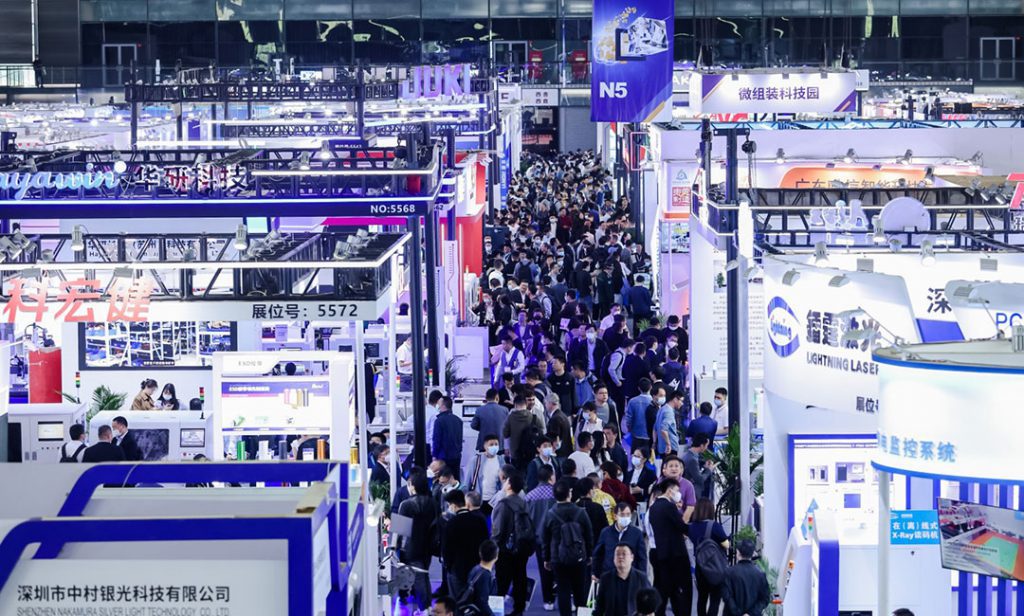
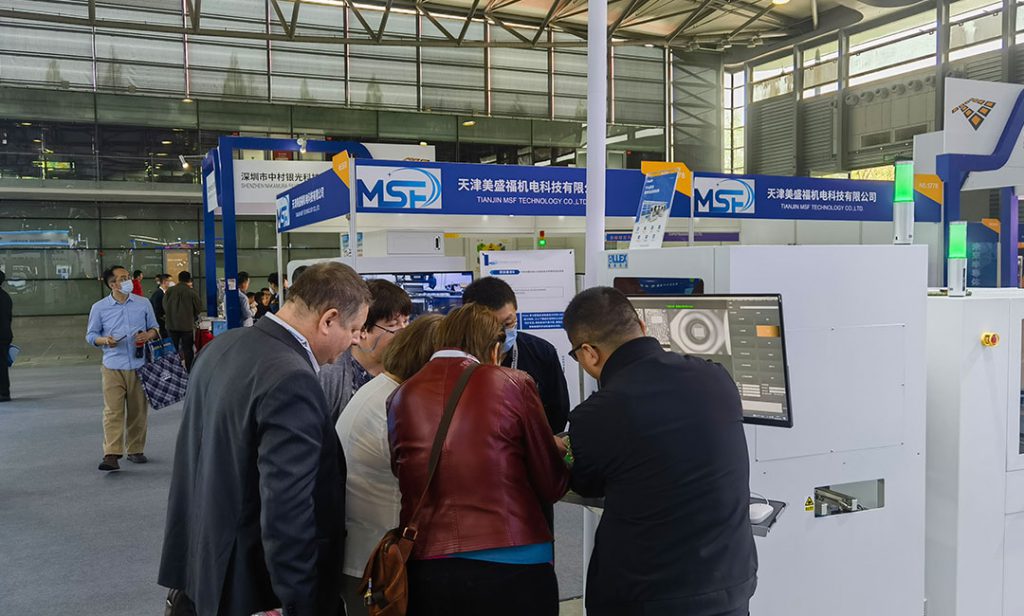
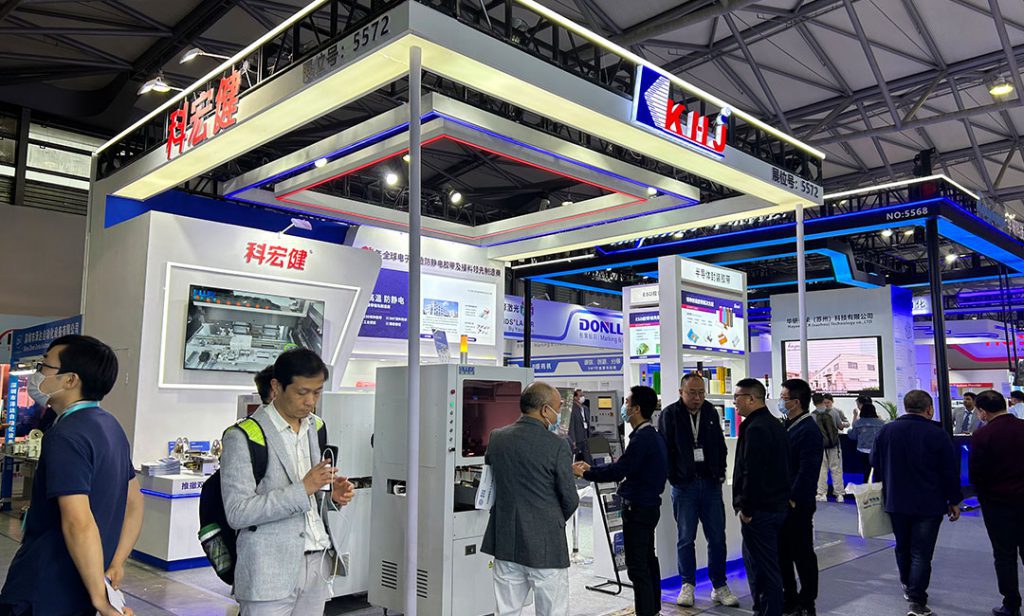
Shenzhen KHJ Technology Co., Ltd. (KHJ) exhibited at productronica China 2023, held 13–15 April 2023 at the Shanghai New International Expo Centre (SNIEC). The show brought together 822 exhibitors and 70,833 trade visitors from 47 countries and regions across 73,000 m² of exhibition space, covering the full electronics manufacturing chain from materials and dispensing to SMT, wire harness processing, test and measurement, and smart factory solutions.
For three days our team met engineers, purchasing managers and distributors working in SMT assembly, semiconductor packaging, PCB fabrication, display modules and battery production. The tapes we brought to the booth were the ones those processes actually depend on.
| Event | productronica China 2023 (Munich Shanghai Electronics Production Equipment Exhibition) |
|---|---|
| Dates | 13–15 April 2023 |
| Venue | Shanghai New International Expo Centre (SNIEC), Halls N1–N5 & W5, Shanghai, China |
| Exhibitor | Shenzhen KHJ Technology Co., Ltd. |
| Booth | [Hall + booth number] |
| Products on display | Thermal release tape, crepe paper masking tape, UV release tape, SMT splice tape |
Thermal release tape — holds firm, lets go on cue
Our thermal release tape is built for processes where a component has to stay perfectly still through grinding, dicing or cutting, and then come away clean. It carries full adhesion at room temperature and loses it once the tape passes its release temperature [insert °C range for the grade], so wafers, glass panels, ceramic substrates and QFN lead frames lift off without residue and without solvent cleaning. Visitors handling the samples were most interested in one thing: how much of the adhesive stays behind. The answer, in short — none that you can see under normal inspection.
Typical uses: wafer back-grinding and dicing, QFN/BGA package singulation, glass and panel processing, temporary fixing in PCB drilling.
Crepe paper masking tape — the workhorse on the line
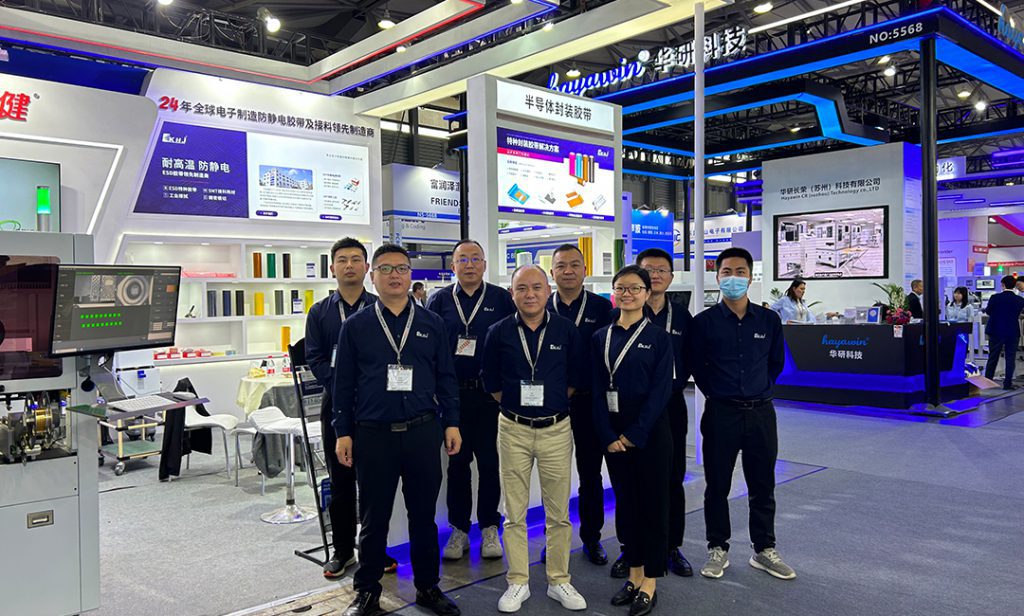
The crepe paper masking tape range remains one of our highest-volume products, and it earned steady attention at the show. The crepe backing tears by hand, conforms around edges and curves, and holds up under the heat of wave soldering, conformal coating and paint masking [insert temperature rating]. It removes in one piece without leaving adhesive on the board or the housing, which is where cheaper tapes tend to fail.
Typical uses: PCB wave-solder and conformal-coating masking, spray painting and surface treatment, coil and transformer insulation, general-purpose holding and bundling.
UV release tape — adhesion that switches off
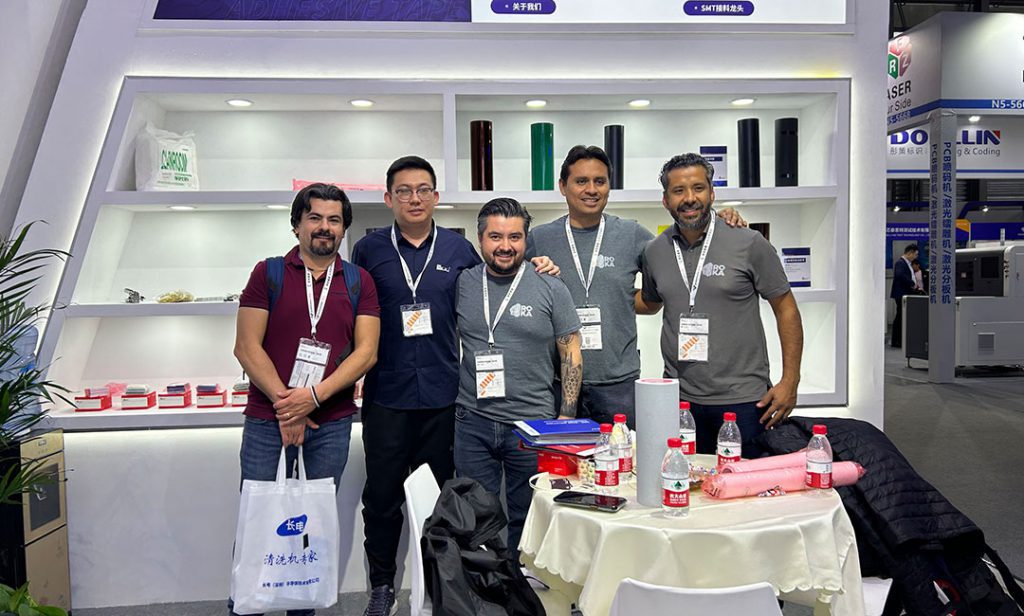
UV release tape solves the same problem as thermal release tape but with a different trigger. The tape holds high tack through dicing, grinding and die expansion, then drops to a low-tack state after a short UV exposure, allowing clean pick-up of thin and fragile dies. It is widely used in BGA and semiconductor packaging, where mechanical stress during de-taping is the main cause of die chipping and cracking.
Grades with antistatic treatment are available for static-sensitive assembly areas, with surface resistivity in the 106–109 Ω/sq range in line with IEC 61340-5-1.
Typical uses: wafer dicing and die expansion, BGA and QFN packaging, semiconductor back-grinding, temporary protection of optical and display surfaces.
SMT splice tape — keeping the line running
On the SMT side, our splice tape is a straightforward productivity product: it joins two carrier tape ends without stopping the feeder, so reel changes no longer cost a machine stoppage. The splice is accurate enough to run through the feeder without jamming, and the adhesive holds under the heat and vibration of the placement process. Widths cover the standard carrier tape range of 8 mm to 44 mm [confirm range against your product sheet], with antistatic options for ESD-controlled lines.
Typical uses: SMT feeder reel changeover, carrier tape joining and repair, high-mix SMT production.
What visitors asked us about
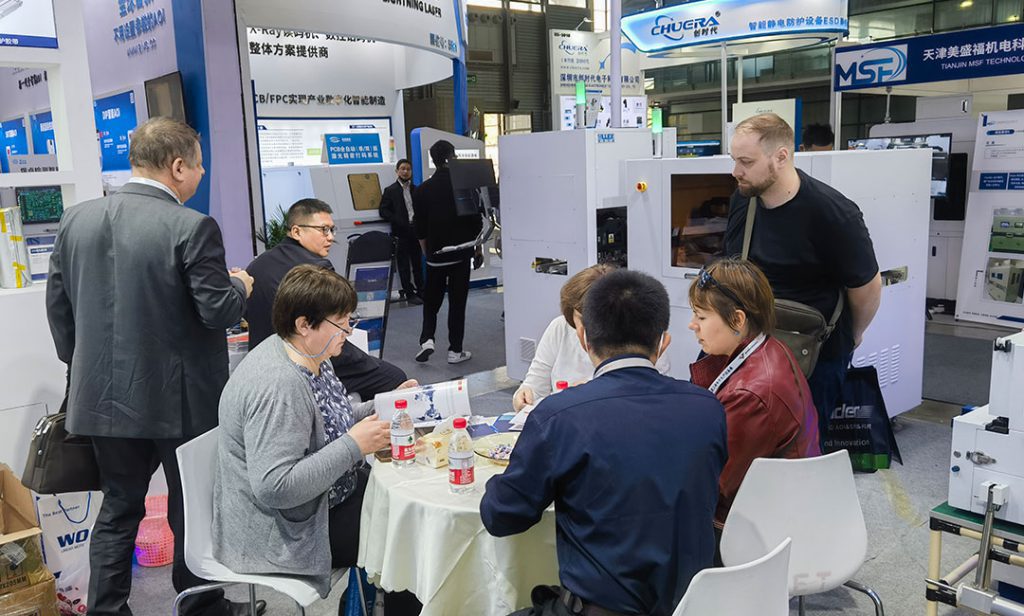
Three questions came up more than any others: whether the tape would leave residue on the finished part, whether it would survive the actual temperature profile of their process rather than the datasheet number, and whether we could slit, die-cut or rewind it to their own dimensions. All three are questions we would rather answer with a sample than a brochure, so most of those conversations ended with a roll being handed over and a test being scheduled.
Talk to us
If you were at productronica China 2023 and did not make it to our booth, or if you are evaluating release, masking or splicing tapes for a new process, send us the details of your application — substrate, temperature profile, dwell time, release method — and we will match a grade and send samples for evaluation.
TRENDING POSTS
- * KHJ Showcases Advanced Adhesive Tape Solutions at SEMICON West 2026 in San Francisco
- * KHJ at FILM & TAPE EXPO 2025: The Hall Stayed the Same, the Buyers Didn’t
- * KHJ at SEMICON West 2025: The Show Moved to Where the Fabs Are
- * KHJ Returns to NEPCON Vietnam 2025: What Two Years Changed
- * KHJ Returns to EMAX 2025 Penang: A Bigger Show Than We Left
HOT TOPIC
-
772
Acrylic Foam Tape
conductive cloth die cutting
Die-Cut
die cutting tape
Double Sided Foam Tape
EMI shielding gasket
foam die cutting
Foam Tape
graphite die cutting
heat restrant tape
heat sink die cutting
high temperature tape
kapton tape
khj
Labels
LCD buffer pad
LCD shielding
L foam
Non-silicone Polyimide Tape
PCB
PI tape
polyimide tape
polyimide tape,kapton tape
precision die cutting
Reflow soldering masking
SEMICON West
senmiconductor
tape
thermal management
thermal release tape
UV Release Tape
wafer
Wafer cutting