
DN0061T Adhesive Transfer Tape, Unsupported Acrylic Bonding Tape for Electronic Devices
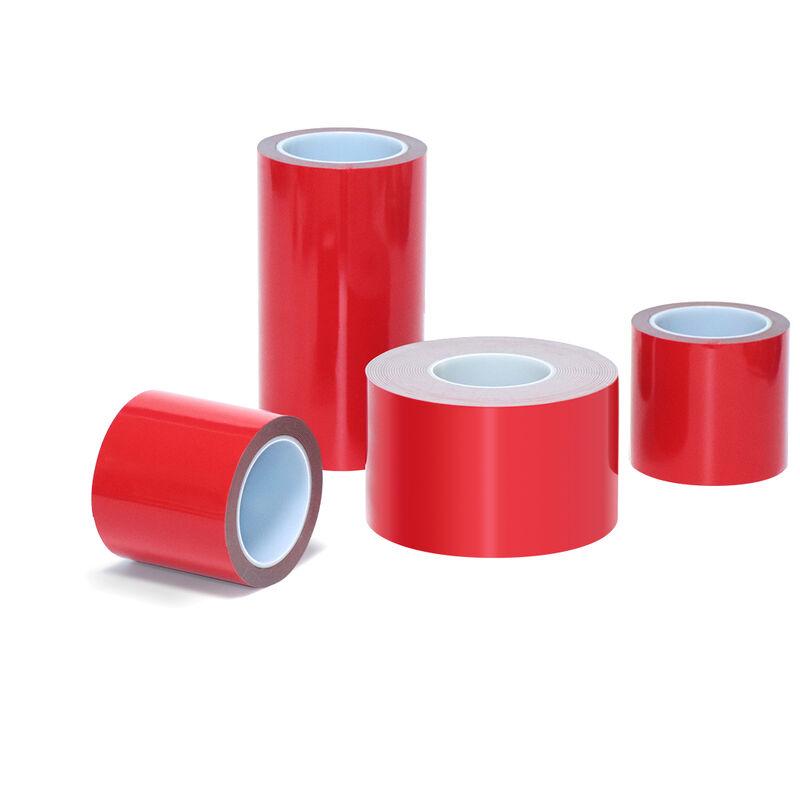
DN0061T is an acrylic adhesive supplied as a film with no carrier inside it. There is no PET layer and no foam core, just a controlled layer of adhesive on a release liner. In an electronic assembly that matters for one practical reason: the tape disappears into the stack. It holds two parts together without adding a structural layer that the mechanical design has to accommodate, and it does it without the holes, the heat or the curing window that other fastening methods bring with them.
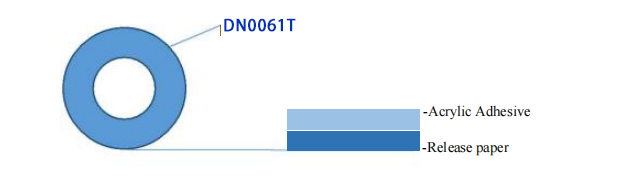
| Test item | Test value | Test method |
| Total thickness (mm) | ||
| 180° peel strength to steel | GB/T2792-2014 | |
| Static shear strength (24mm*24mm, 23℃, 1000g) | GB/T4851-2014 | |
| Initial tack (loop tack) | ||
| Temperature resistance (℃), short term | ||
| Temperature resistance (℃), long term | ||
| Holding power at elevated temperature |
Why a tape replaces a rivet, a weld or a liquid adhesive
Three fastening methods dominate small electronic assemblies. Each one imposes a cost that stays in the design long after the joint is made.
| Method | What it costs the assembly | What DN0061T changes |
| Rivets and screws | Holes drilled through the part, stress concentrated at the fixing points, heads visible on the outer face, dissimilar materials hard to join | No holes and no fixing points. The load spreads across the whole bonded area, and the outer face stays clean |
| Spot welding | Heat affected zone around every weld, distortion on thin sheet, metals only, grinding and finishing afterwards | Room temperature process. No heat distortion, no weld marks, no rework, and dissimilar materials can be joined directly |
| Liquid adhesive | Mixing, dispensing and curing time, solvent content, hard to control the glue line, squeeze out that has to be cleaned | Bond line thickness set by the tape rather than by the operator, no mixing, no squeeze out, and the part can move to the next station immediately |
The trade is bond area. A tape joint needs contact area that a screw does not, which is why the method works best on overlapping faces, flanges and stiffener bonds rather than on butt joints.
What having no carrier changes
The bond line is only adhesive. Nothing inert sits between the two parts, so the joint thickness is set by the adhesive layer alone and stays repeatable across a production run.
High initial tack. The adhesive grips as soon as it is placed. Parts stay where they are put, so fixtures and clamps are not needed while the bond develops.
It conforms to small features. Without a stiff web to hold it flat, the film follows narrow flanges, curved edges and the area around cutouts that a carrier backed tape would bridge and leave partly unbonded.
It resists what the process throws at it. UV exposure, weathering and solvent contact are all covered, which matters for assemblies that get wiped during inspection or cleaning.
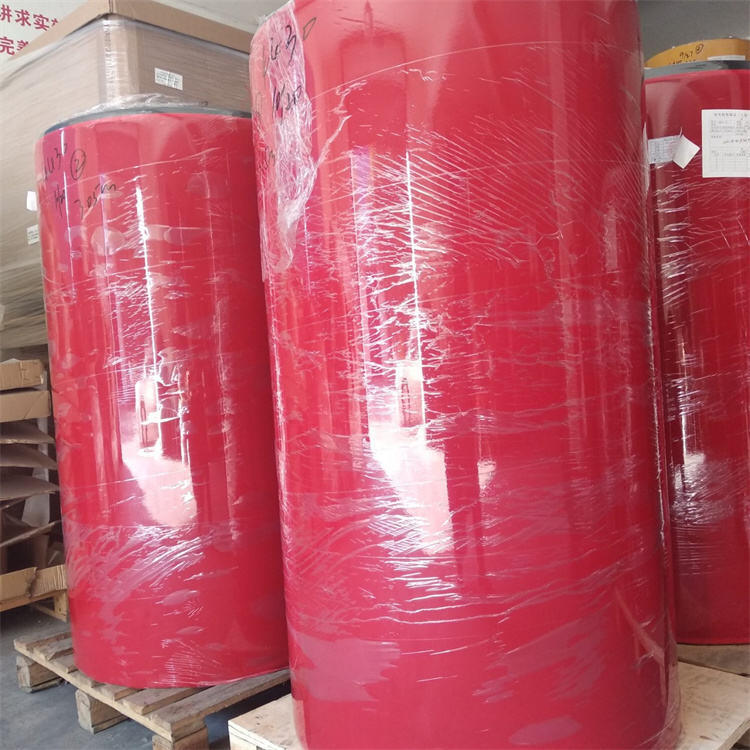
Where DN0061T is used
Electronic devices, for bonding and fixation. The tape is specified for holding components in place inside an enclosure rather than for carrying structural loads. Typical positions include housing to frame assembly, flex circuit and FPC fixing, shield can and heat spreader attachment, bezel and display module bonding, rating plates and labels, and button or light guide fixing.
Where a joint needs a gap filled or vibration absorbed, a foam tape does the job better. KHJ supplies acrylic foam tapes such as DN1101B at 1.10 ± 0.11 mm and DN1601G at 1.6 mm for those assemblies.
Getting a clean bond in a small assembly
Surface. Contaminants are the main cause of a bond that fails weeks later. Clean both faces with a solvent wipe and give it time to flash off before the tape goes down. Dust, mould release and skin oil all reduce the final strength.
Placement. Put the tape or the component down in a single pass. Lifting and repositioning costs tack, and on a narrow bond line it also drags air in under the film.
Pressure. A transfer tape has to be pressed to work. Roller, hand pressure or press, whichever the assembly allows, applied evenly across the whole bond area rather than in the middle. Contact area turns into bond strength, and only on the parts that actually touch.
Time. Strength continues to build after the part leaves the station. Plan the handling and the load so the assembly is not fully loaded in the first moments after bonding.
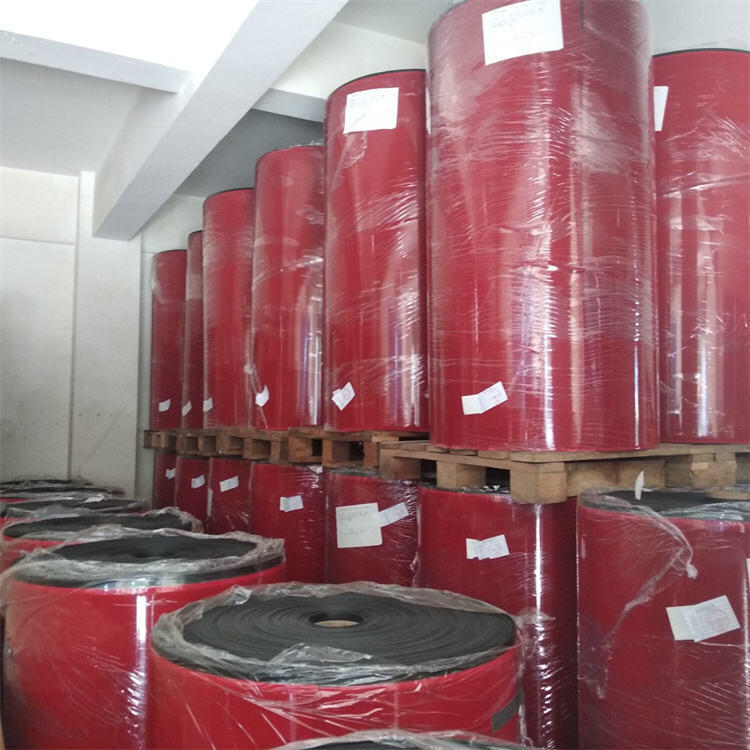
Storage and shelf life
| Item | Condition |
| Storage temperature | 21 ℃ |
| Relative humidity | 50% RH |
| Light | Out of direct sunlight |
| Shelf life | 12 months from the date of manufacture, stored in initial packing |
Datasheet note
The figures we publish for DN0061T come from our own laboratory testing and from production experience with the product. They describe behaviour under those conditions rather than promising a result in a specific design. Responsibility for confirming that the tape suits the intended application sits with the buyer before the design is approved for use. Tell us the substrates and the process and we will help you check it.
FAQ
What is the difference between a transfer tape and a double sided tape? A double sided tape carries its adhesive on a substrate, which can be PET film, paper or foam. A transfer tape is the adhesive layer on its own, with a release liner on one or both faces. The liner comes off and what stays in the joint is adhesive.
What is DN0061T made of? An acrylic adhesive film with no carrier, supplied on a release liner. It is RoHS compliant and manufactured by KHJ in Shenzhen, China.
How thin is the bond line? The calliper is listed on the datasheet for the roll you order. Give us your stack height or your groove dimension and we will confirm which roll matches it.
Can it really replace spot welding? On the right joint, yes. The tape handles shear and tensile load well when the bond area is sized for the load, and it removes the heat distortion and the finishing work that welding brings. It is a poor fit for joints loaded in peel at an exposed edge. Show us the joint and we will tell you which way it should go.
Will cleaning solvents attack the bond? The adhesive is specified against solvent exposure, which is one of the reasons it is used inside assemblies that get wiped. If your cleaning process uses a specific solvent at a specific temperature, send us the details so we can confirm against test data.
Should I use DN0061T or DN0501B? Both are unsupported acrylic tapes with RoHS compliance. DN0061T is aimed at bonding and fixing inside electronic devices. DN0501B is aimed at membrane switches, metal nameplates, vehicle signage and safety glass lamination. Send us the application and we will point you to the right one.
Can it be die cut for automated placement? Die cut shapes and slit rolls are confirmed against your drawing and volume. Contact the team with the geometry you need.
Request a sample
Tell us the two parts being joined, the bond area and the process steps the assembly will go through, and we will confirm whether DN0061T fits or whether a foam grade suits the joint better.
SEO metadata
Page title (60 characters) DN0061T Adhesive Transfer Tape for Electronics Bonding, RoHS
Meta description (154 characters) DN0061T unsupported acrylic adhesive transfer tape for bonding and fixing electronic devices. High initial tack, UV and solvent resistant, RoHS compliant.
URL slug dn0061t-adhesive-transfer-tape-electronics-bonding
Primary keywords adhesive transfer tape, DN0061T, unsupported acrylic transfer tape
Secondary keywords transfer tape for electronics bonding, double sided tape replacing rivets, high initial tack transfer adhesive, die cut acrylic transfer tape
Alternative titles
DN0061T Adhesive Transfer Tape | Acrylic, RoHS Compliant(56)DN0061T Unsupported Acrylic Adhesive Transfer Tape, RoHS(56)Adhesive Transfer Tape DN0061T | High Tack, Solvent & UV Resistant(66)
Alternative CTAs
Tell us the joint and the process steps and we will confirm the grade.Ask for a die cut sample in your part geometry.Send us your stack height and we will match the tape calliper to it.
Need this tape for your line?
Tell us the substrate, the peak temperature and what has to happen after removal — we will confirm a construction and send samples.
- Free samples for evaluation
- TDS and test data on request
- Reply within one business day
HOT TOPIC
-
772
Acrylic Foam Tape
conductive cloth die cutting
Die-Cut
die cutting tape
Double Sided Foam Tape
EMI shielding gasket
foam die cutting
Foam Tape
graphite die cutting
heat restrant tape
heat sink die cutting
high temperature tape
kapton tape
khj
Labels
LCD buffer pad
LCD shielding
L foam
Non-silicone Polyimide Tape
PCB
PI tape
polyimide tape
polyimide tape,kapton tape
precision die cutting
Reflow soldering masking
SEMICON West
senmiconductor
tape
thermal management
thermal release tape
UV Release Tape
wafer
Wafer cutting