
DN0131W Double Coated Tissue Tape, 0.16 mm Flexible Double Sided Tape for Die Cutting, Splicing and Laminating
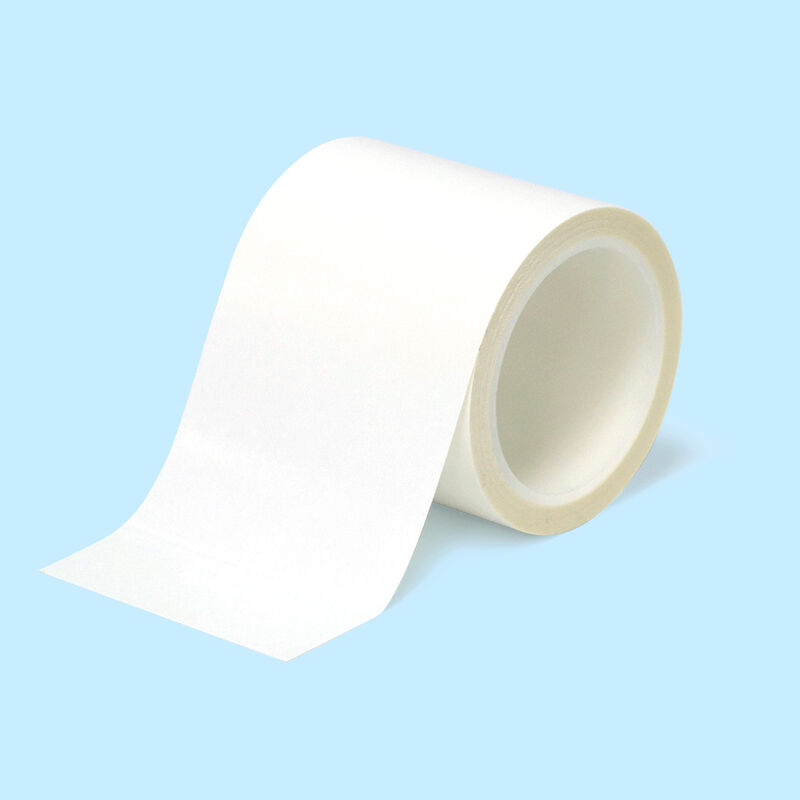
DN0131W is a double sided tape built on a tissue carrier with acrylic adhesive on both faces. The tissue is a thin, impregnated paper web, and it is the reason this tape behaves differently from both an unsupported adhesive film and a foam tape. It gives the adhesive layer a body that holds its shape during converting, while staying soft enough to follow a curved or slightly irregular surface once it is bonded.
At 0.16 mm with the liner removed, the tape adds almost nothing to the height of the assembly. What it adds is a repeatable adhesive layer that can be converted into complex shapes at production speed.
Why a tissue carrier suits converting
The people who specify this tape tend to be the ones running the die cutter, not the ones running the assembly line, because most of the value shows up before the part is bonded.
It holds its shape while it is cut. An unsupported adhesive film can stretch or distort as the die comes down. A tissue carrier keeps the web stable, so the cut edges stay true to the drawing and part dimensions do not drift across a long run.
It strips cleanly out of the waste. Matrix removal is where weak carriers fail. The tissue gives the waste enough tensile strength to pull away from small and intricate cut shapes without tearing and leaving fragments behind.
It runs at speed. Rolls feed without telescoping or blocking under tension, which keeps the press or the rotary die station running instead of stopping for web breaks.
It stays soft after conversion. Rigidity in the carrier helps at the die, but hurt at the joint. Tissue is soft enough to bend around small radii and to sit flush on a curved face.
What the 0.16 mm bond line gives you
Because the tape is thin, the bonded assembly stays visually and dimensionally unchanged. Labels, nameplates and printed parts sit flat against the surface with no visible step at the edge, and no gap opens up underneath if the part is flexed later. For laminating work, the finished stack gains 0.16 mm rather than the millimetres a foam tape would add.
Technical data
| Test item | Test value | Test method |
| Total thickness (Liner removed) | 0.16 mm | Micrometers |
| 180° Peel strength to steel (20min) | 8.2 N/cm | GB/T2792-2014 |
| Static Shear Strength (24mm*24mm, 23℃, 1000g) | 10000 mins | GB/T4851-2014 |
| Temperature Resistance (℃) | Short term 180, Long term 93 |
Reading the numbers
8.2 N/cm at 180 degrees after 20 minutes (GB/T2792-2014). Measured 20 minutes after the tape is applied, so this is the strength available early in the process rather than the final figure. Converted, it works out at 20.5 N per 25 mm of width, which is the peel resistance appropriate to a thin tissue tape on a clean metal or painted surface. A thin carrier tape is not the right product for a heavy load; it is the right product for holding flat, lightweight parts in place for the life of the assembly.
Static shear of 10000 minutes (GB/T4851-2014). A 24 by 24 mm patch carried a 1000 g load at 23 ℃ for more than 166 hours without slipping. Vertical or overhead parts held by this tape will not creep.
180 ℃ short term and 93 ℃ long term. The short term figure covers brief exposure to heat, such as a short pass through a heated process or a nearby hot component. Continuous service is rated at 93 ℃, which covers most electronics, signage and interior applications. The acrylic system stays flexible at low temperatures as well, so the tape is not limited to warm conditions.
Applications
Die cutting. Converting the tape into shaped pads, washers, gaskets, mounting dots, frame shapes and label blanks. The tissue carrier is what makes tight geometries and clean matrix stripping possible.
Splicing. Joining the ends of paper, film, foil and board webs during production, and holding flying splices where the tape has to bond instantly and then stay bonded while the web runs.
Mounting. Nameplates, rating plates, printed labels, decorative parts, point of sale material and small hardware where a flat bond line matters more than gap filling capability.
Electronics assembly. Fixing foils, labels, insulation patches, shielding films and internal light parts inside compact assemblies. The thin bond line keeps the internal stack height predictable.
Laminating. Bonding printed sheets, membrane layers and film to film where a uniform thin adhesive layer is required.
Converting and bonding notes
At the die. Give the web even tension and keep the roll aligned. A tissue carrier tolerates normal converting speeds, but slewing or an unbalanced splice will cause the web to wander and the cut to go off register.
On the part. Both surfaces should be clean, dry and free of dust, oil and grease. Contaminants are the usual reason a tissue tape bond fails later rather than sooner.
Pressure matters more than dwell. Apply firm pressure across the whole bonded area with a roller, by hand or in a press depending on the assembly. A tissue tape needs full contact to reach its rated peel value, and the 20 minute figure assumes that contact has been made.
Do not lift and reposition. Re-applying the tape after it has touched the surface reduces adhesion and can trap air beneath the bond. Place it in one movement.
Temperature at assembly. The ideal application range is 20 ℃ to 40 ℃ (68 °F to 104 °F). Do not apply below 10 ℃, and keep the roll away from heat sources and open flames.
Storage and shelf life
| Item | Condition |
| Storage temperature | 21 ℃ |
| Relative humidity | 50% RH |
| Shelf life | 12 months from the date of manufacture, stored in initial packing |
FAQ
What is a double coated tissue tape? A double sided tape where the adhesive is coated on both faces of a thin tissue carrier. The tissue is impregnated so that it holds together while the adhesive is applied and while the tape is converted, and it stays flexible after bonding.
How is it different from an unsupported transfer tape? A transfer tape is adhesive alone, which is thinner but harder to convert into intricate shapes because there is no carrier to hold it. A tissue tape trades a fraction of a millimetre of thickness for stability at the die and clean matrix removal.
How is it different from a foam tape? A foam tape fills a gap and absorbs vibration, which is what you want on uneven surfaces or moving assemblies. A tissue tape makes a thin, flat bond on parts that already fit together well.
What thickness is DN0131W? 0.16 mm with the liner removed. Confirm the roll calliper against your stack height requirement when you order.
Can it be supplied in die cut shapes? Yes. Send the drawing and the volume and we will confirm the format, the liner and the packaging.
Will it hold outdoors? The acrylic adhesive is specified against UV, weathering, moisture and solvent exposure, and continuous service temperature is 93 ℃. For a permanent outdoor joint, prepare the surface properly and size the bond area for the load.
What is the minimum order quantity? Contact us with the width, the length and the format you need and we will confirm the MOQ and the lead time.
Is it RoHS compliant? Yes. DN0131W is RoHS certified.
Request a sample
Send us your drawing or the web you need to splice, together with the surfaces involved, and we will confirm whether DN0131W suits the job or whether a thicker foam grade fits better.
SEO metadata
Page title (63 characters, main suggestion) Double Coated Tissue Tape DN0131W | Die-Cutting & Splicing Tape
Shorter alternative (57 characters) DN0131W Double Coated Tissue Tape | 0.16mm, RoHS, Die-Cut
Meta description (151 characters) DN0131W double coated tissue tape, 0.16 mm. Peel 8.2 N/cm, 180 C short term, 93 C continuous, RoHS. For die cutting, splicing, mounting and laminating.
URL slug double-coated-tissue-tape-dn0131w
Primary keywords double coated tissue tape, tissue tape DN0131W, double sided tissue tape
Secondary keywords tissue tape for die cutting, splicing tape for paper and film webs, thin double sided mounting tape, 0.16mm double coated tape
Alternative titles
Double Coated Tissue Tape DN0131W | High Adhesion, 0.16mm, RoHS(63)Tissue Tape DN0131W | Die Cutting, Splicing, Laminating, RoHS(63)DN0131W Tissue Tape | 0.16mm Double Coated Tape for Converting(63)
Alternative CTAs
Send us the die drawing and we will confirm the liner and the format.Ask for a sample roll and test the matrix stripping on your press.Tell us the web you need to splice and we will match the tape to it.
Need this tape for your line?
Tell us the substrate, the peak temperature and what has to happen after removal — we will confirm a construction and send samples.
- Free samples for evaluation
- TDS and test data on request
- Reply within one business day
HOT TOPIC
-
772
Acrylic Foam Tape
conductive cloth die cutting
Die-Cut
die cutting tape
Double Sided Foam Tape
EMI shielding gasket
foam die cutting
Foam Tape
graphite die cutting
heat restrant tape
heat sink die cutting
high temperature tape
kapton tape
khj
Labels
LCD buffer pad
LCD shielding
L foam
Non-silicone Polyimide Tape
PCB
PI tape
polyimide tape
polyimide tape,kapton tape
precision die cutting
Reflow soldering masking
SEMICON West
senmiconductor
tape
thermal management
thermal release tape
UV Release Tape
wafer
Wafer cutting