
DN0801G Double Sided Acrylic Foam Tape, 0.8 mm Grey Foam Tape for Metal, Glass and Painted Surfaces
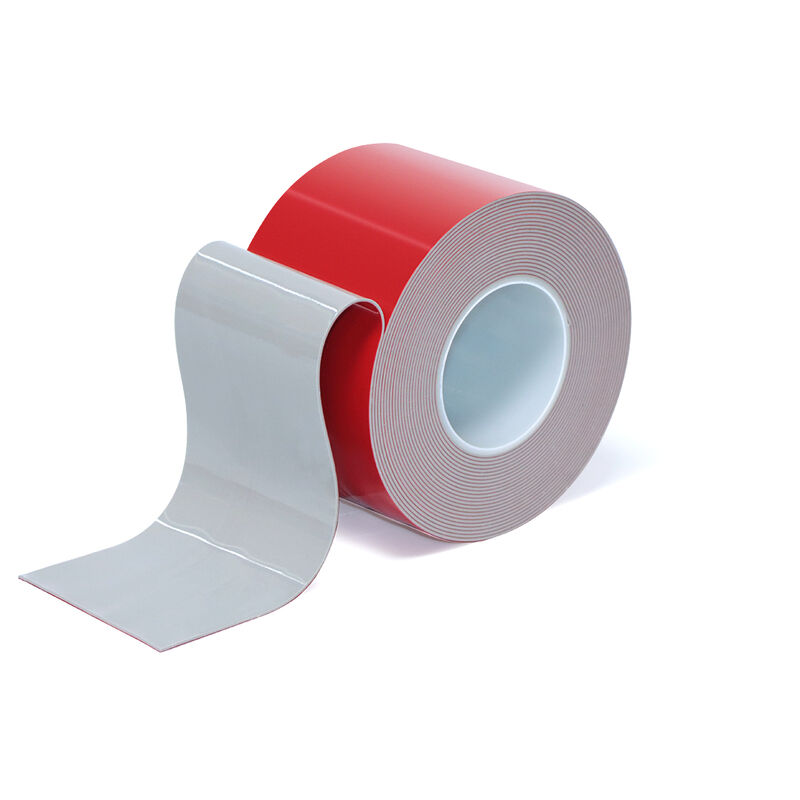
DN0801G is a double sided acrylic foam tape at 0.8 mm, supplied in grey. Two properties separate it from the rest of the acrylic foam range, and both of them are decisions made at the point of specification rather than properties a buyer can add later.
The first is thickness. At 0.8 mm this is the thinnest foam tape KHJ produces, which places it between an unsupported adhesive film and a full thickness mounting tape. It carries the compressibility of a foam core, but it does not push the two parts apart the way a 1.6 mm grade does.
The second is colour. Grey behaves like a shadow rather than a line. Where a bonded strip runs along an edge that stays visible, whether behind glass, under dark trim or across an anodised frame, grey disappears into the surrounding surface instead of announcing the joint.
Where 0.8 mm sits in a bond line
Thickness in this product family is a fit dimension, not a quality grade, and each step in the range answers a different gap.
| Grade | Foam thickness | The joint it is made for |
| DN0801G | 0.80 mm | Panels that already meet closely. Facings that have to stay flush. Edges where a thicker foam would be visible as a step |
| DN1101B | 1.10 ± 0.11 mm | Slightly uneven panels and painted or coated surfaces where the bond line can be a little thicker |
| DN1601G | 1.60 mm | Visible gaps between parts, curved or bowed panels, assemblies that see vibration in service |
A thinner foam is stiffer in the joint for a simple reason. There is less material to compress, so the assembly does not flex as much under load and the panel faces stay where the design put them. The trade is gap filling. Below roughly 0.5 mm of remaining gap, the foam is fully compressed and stops absorbing movement, which is the point at which a thicker grade should be chosen instead.
The 0.8 mm core also keeps the bond line inside a dimension that many designs already have. If a drawing calls for a 0.8 mm step, a gasket recess at 0.8 mm, or a bonded joint that must stay under one millimetre, this grade fits without changing the part geometry.
What the grey core changes
It removes the bright line. On glass, on brushed or anodised aluminium and on light coloured panels, a white or pale foam core reads as a visible seam along the edge. Grey cuts the contrast and the edge blends into the shading of the surrounding surface.
It hides behind glazing. A bonded strip behind glass or clear acrylic is normally only visible from the outside when the bond line is lighter than the background. A grey core stays close to the tonal value of a dark interior or a shaded cavity.
It matches common substrate colours. Powder coated frames, galvanised steel, graphite and dark grey composite panels are widely used in signage and in building facings, and a grey core sits inside that palette rather than against it.
It does not pass light. The pigmented core blocks the light path through the bond line, so a dark joint does not read as a lighter strip when the panel is lit from behind or viewed against the sun.
Technical data
| Test item | Test value | Test method |
| Total thickness (Liner removed) | 0.8 mm | Micrometers |
| 90° Peel strength to steel (20min) | 19 N/cm | GB/T2792-2014 |
| Static Shear Strength (24mm*24mm, 23℃, 1000g) | 10000 mins | GB/T4851-2014 |
| Temperature Resistance (℃) | Short term 150, Long term 93 |
How to read those figures
0.8 mm, liner removed. This is the working thickness. Plan the recess, the offset or the panel step against this number, not against the caliper of the roll as it comes off the pallet.
19 N/cm at 90 degrees, read 20 minutes after application (GB/T2792-2014). The jig holds the sample at 90 degrees to the steel plate throughout the pull, which is closer to the load a trim edge puts on a joint than the folded back 180 degree test used on some grades in the range. In width terms, 19 N/cm works out at about 47.5 N for every 25 mm of tape. The 20 minute timing matters as much as the value itself: it is the strength the joint already has on the day it is built, so an assembly can be handled, packed or moved to the next station without a cure period.
10000 minutes of static shear (GB/T4851-2014). Translate that figure and it means a 24 mm square of tape, carrying a 1 kg weight at room temperature, had still not moved after roughly seven days under continuous load. This is the number to check when the bonded part hangs from a vertical face or sits above the people working underneath it.
150 ℃ short term and 93 ℃ long term. The short term value describes brief exposure to production heat, a heat soak inside a closed panel, or a hot component mounted close to the joint. For continuous exposure the grade is rated at 93 ℃, a limit that covers a vehicle interior, a lit sign enclosure, a building facing and most equipment housings. Low temperature is not a constraint either, and a joint formed in an unheated workshop works provided the roll was stored correctly beforehand.
Where the tape is specified
Automotive. Body side mouldings, dark exterior trim, emblems and nameplates, door edge and pillar trim, interior panel stiffeners. The grey core makes a clean fix on dark painted body panels without a visible light edge, and the foam layer takes up the vibration and the temperature cycling that the joint sees in service.
Electronics. Housings and enclosures, display frames, bezel bonding, stiffeners and internal brackets. A 0.8 mm bond line keeps the stack height predictable inside a tight enclosure, and no fastener heads appear on the outer face.
Advertising and signage. Channel letters, composite panel faces, light box frames and display stands. Grey works on dark frames and on anodised or powder coated surrounds, and the closed cell core keeps rain and dust out of the joint.
Hardware manufacturing. Rating plates, metal covers, brackets, appliance housings. The tape removes the drilling and the refinishing that follow a screw or a spot weld on light assemblies.
Construction and building facings. Window and door frame assembly, curtain wall components, decorative metal trim. The core takes up the movement between materials that expand at different rates.
Solar PV. Frame bonding, panel to rail assembly, junction box mounting. The bond has to survive ultraviolet exposure, rain and continuous outdoor temperature cycling for years.
Elevators. Stiffener ribs fixed to car walls, decorative car panelling, door skins. A moving car produces a constant low level of vibration, and the core takes that energy out before it reaches the adhesive interface.
Bonding to painted and coated surfaces
Painted metal is the substrate this grade was tuned for, and it is also the substrate where results vary most between customers.
The tape was developed against a specific adhesive system and it bonds well to a wide range of paint and coating types. What changes from plant to plant is the surface itself. A 2K polyurethane topcoat, a polyester powder coating, an e-coat primer, a clear coat over a base coat and a stoving enamel all present a different chemistry to the adhesive, and any of them can carry mould release, silicone overspray, polishing compound or handling oil that will reduce the bond no matter which tape is used.
Two practical steps follow from that. Wipe the coated surface with isopropyl alcohol or a silicone free cleaner before bonding, and confirm the result on a piece of your own coated material rather than on our laboratory panel. Send us a coated sample and we will test the actual combination.
Applying the tape
Prepare both faces. Anything that stays between the adhesive and the substrate will weaken the bond: oil, grease, dust, mould release or handling residue. A solvent wipe, followed by enough time for the solvent to flash off, is the usual method.
Work inside the temperature window. The ideal range for application is 20 ℃ to 40 ℃ (68 °F to 104 °F). Below 10 ℃ the adhesive is too stiff to wet the surface, so avoid bonding a cold part or working in an unheated bay.
Press the full area. Use a roller, a squeegee or press pressure, whichever the assembly allows, and pass over the entire bonded area from one end to the other so air is pushed ahead of the tool instead of trapped under the tape. Adhesive reaches its working strength only where it has been pressed into contact.
Place it once. Repositioning after the tape has touched the substrate costs tack and can drag air into the bond line.
Let the bond build. Strength continues to increase after the part leaves the station. Keep the assembly away from full service load for the period your process allows.
Handle and store away from heat. Keep the product clear of heat sources and open flames.
Storage and shelf life
| Item | Condition |
| Optimal storage temperature | 21 ℃ |
| Optimal relative humidity | 50% RH |
| Packaging | Stored in initial packing |
| Shelf life | 12 months from the date of manufacture |
FAQ
Why grey rather than black or white? Black suits joints behind glass and on black or dark grey surfaces, and it blocks light through the bond line. White suits light panels and white painted parts. Grey sits between the two and is the general purpose choice for dark and mid tone surfaces, for anodised and galvanised metal, and for edges that should read as shading rather than as a seam. KHJ also supplies DN1101B with a black core for applications that call for it.
Is 0.8 mm enough to fill my gap? Add up the flatness error of both parts, the coating thickness and the assembly tolerance. If the total is under about 0.6 mm the foam can bridge it and still have material left to compress. Above that, a thicker grade such as DN1601G at 1.6 mm carries more reserve.
Will it hold on a powder coated panel? It bonds well to powder coated and painted metal when the surface is cleaned first. Coating chemistry and the state of the surface vary, so send us a sample of your coated part and we will confirm on that material.
What does 19 N/cm mean in width I would order? Every 10 mm of tape width carries 19 N of peel resistance, so 25 mm of width carries about 47.5 N. Total load capacity also depends on the bond area, the substrate and the direction of the load, which is why we size joints on the application rather than on the datasheet alone.
Should I choose DN0801G, DN1101B or DN1601G? All three are acrylic foam tapes with a closed cell core and RoHS certification. DN0801G at 0.8 mm is for close fitting joints and for edges that must stay flush and invisible. DN1101B at 1.10 ± 0.11 mm is the middle step for slightly uneven or coated panels. DN1601G at 1.6 mm handles visible gaps, curved faces and joints that have to absorb movement.
Will it bond to polypropylene or polyethylene? Not reliably. Both are low surface energy materials, so an acrylic adhesive has very little to hold on to, and an untreated PP or PE face normally needs a primer or a different product altogether. Metal, glass and most painted finishes fall inside the specification. Send us the material name and we will confirm it.
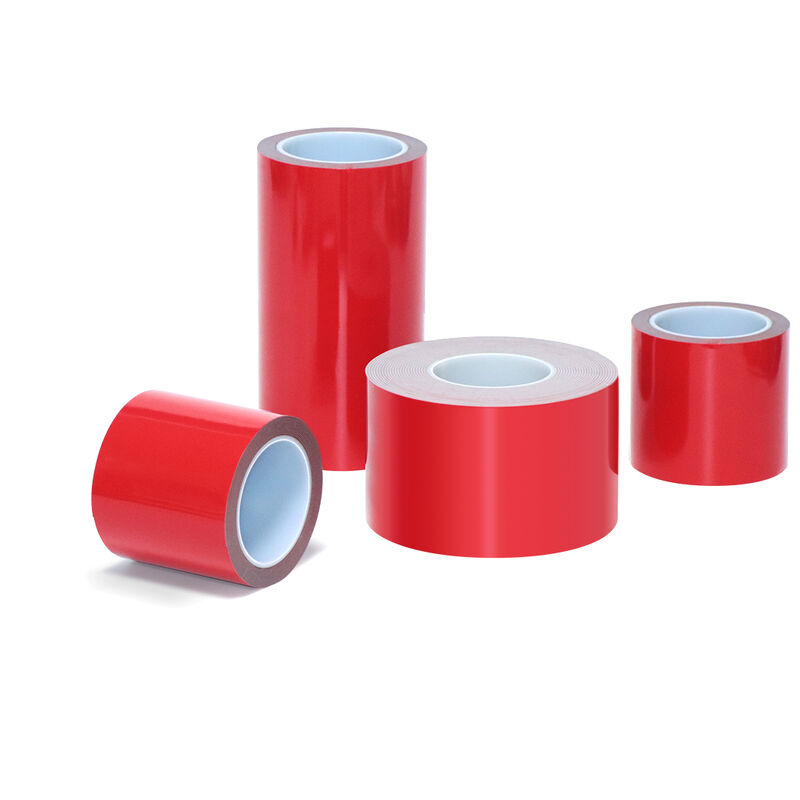
Can it be supplied slit to width or die cut? Both slit rolls and die cut parts are quoted from your drawing, and the order volume decides which tooling route we use. Contact the team with the geometry and the liner preference.
Is it RoHS compliant? Yes. DN0801G is manufactured by KHJ in Shenzhen, China, and carries RoHS certification.
Request a sample
Send us the two surfaces being bonded, the gap between them, the load the joint will carry and the temperature it will see. We will confirm whether 0.8 mm is the right step in the range, or point you to a thicker grade if the joint needs one. Write to sales@khj.cn.
Need this tape for your line?
Tell us the substrate, the peak temperature and what has to happen after removal — we will confirm a construction and send samples.
- Free samples for evaluation
- TDS and test data on request
- Reply within one business day
HOT TOPIC
-
772
Acrylic Foam Tape
conductive cloth die cutting
Die-Cut
die cutting tape
Double Sided Foam Tape
EMI shielding gasket
foam die cutting
Foam Tape
graphite die cutting
heat restrant tape
heat sink die cutting
high temperature tape
kapton tape
khj
Labels
LCD buffer pad
LCD shielding
L foam
Non-silicone Polyimide Tape
PCB
PI tape
polyimide tape
polyimide tape,kapton tape
precision die cutting
Reflow soldering masking
SEMICON West
senmiconductor
tape
thermal management
thermal release tape
UV Release Tape
wafer
Wafer cutting