
Thermal Release Tape for Sapphire Wafer Dicing: Secure Holding, Controlled Release and Cleaner Processing
2026-10-21 By KHJ
Sapphire is widely used in LED manufacturing, optical components, semiconductor substrates, and other applications where hardness, thermal stability, and optical performance are important.
Those same properties that make sapphire valuable also make it difficult to process.
During cutting and dicing, sapphire wafers and substrates must remain securely positioned while being exposed to mechanical stress, vibration, cooling fluids, and precision cutting operations. Once the process is complete, the individual pieces need to be removed without chipping, cracking, or leaving unwanted adhesive residue.
For manufacturers handling thin sapphire wafers or small precision-cut components, temporary fixation is an important part of the process.
Thermal release tape provides one possible solution. It offers adhesion during processing and is designed to reduce its bonding strength after controlled heating, allowing the processed sapphire pieces to be separated from their temporary support with less mechanical force.
The challenge is choosing a tape that holds securely during cutting but releases predictably afterward.
1. Application Background: Why Sapphire Cutting Requires Reliable Temporary Fixation
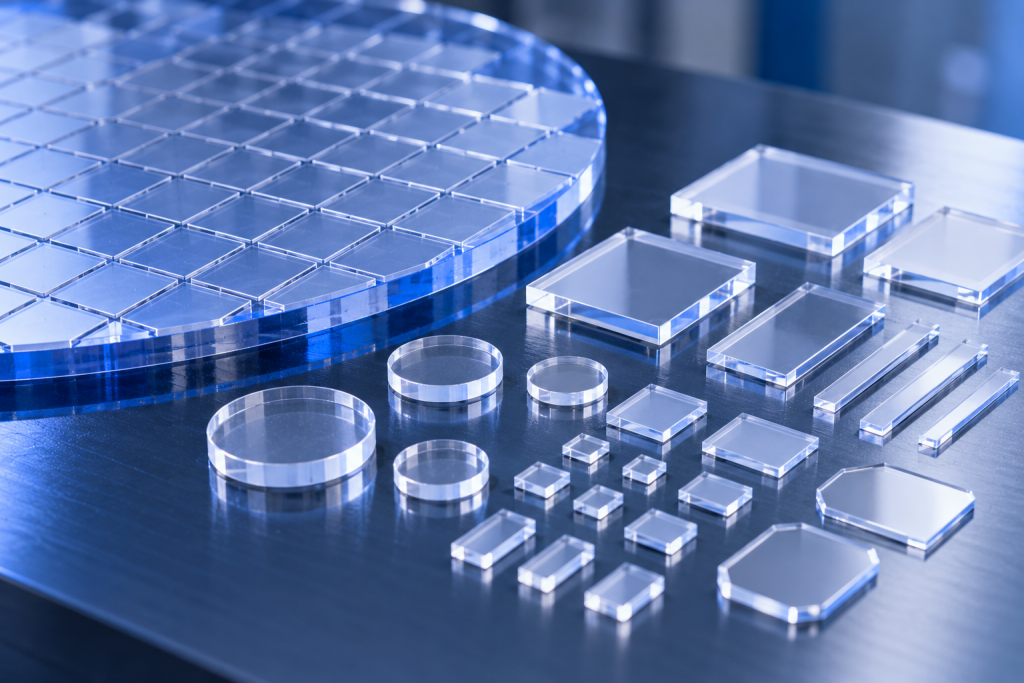
Sapphire is a single-crystal aluminum oxide material (Al₂O₃) known for its high hardness, chemical resistance, and optical transparency.
It is commonly used in:
- LED and micro-LED substrate manufacturing.
- Optical windows and protective covers.
- Precision sapphire components.
- Semiconductor and electronic substrates.
- Specialized optical and industrial applications.
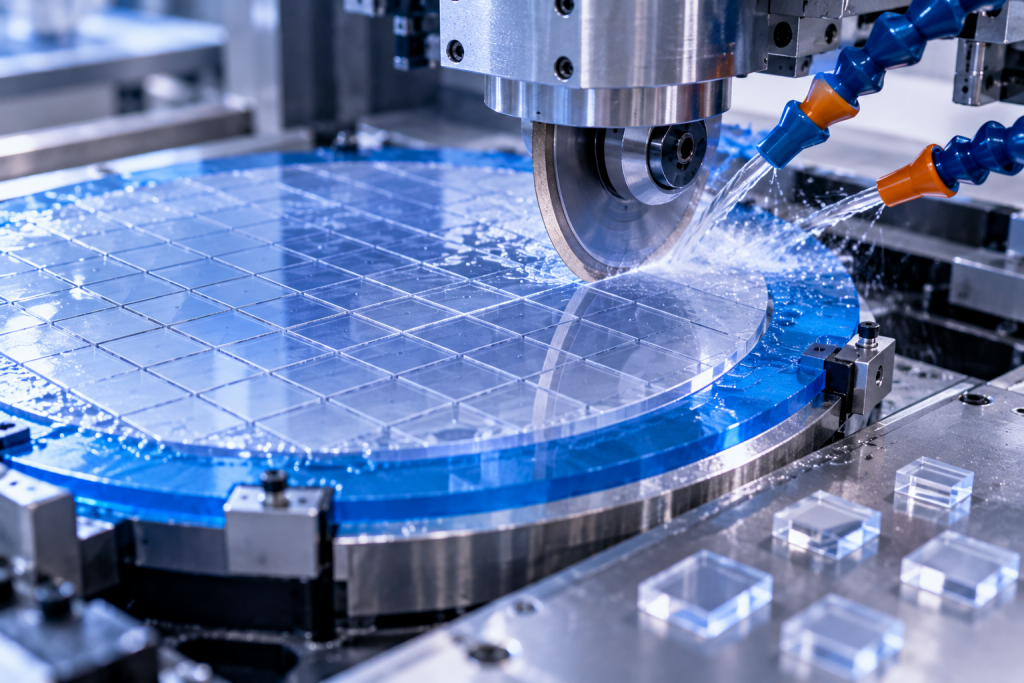
Depending on the final product, sapphire may be processed using mechanical blade dicing, laser scribing, laser dicing, or other precision cutting techniques.
Each method presents different challenges.
In mechanical dicing, the cutting process can generate vibration, localized stress, and small particles. The substrate must remain stable to maintain cutting accuracy and reduce the risk of edge damage.
In laser processing, thermal effects, debris, and the interaction between the laser and the temporary support material must also be considered.
After cutting, individual sapphire pieces may be extremely small or thin. Removing them from a strongly bonded carrier can introduce additional mechanical stress.
For this reason, manufacturers need a temporary bonding solution that supports both cutting stability and controlled release.
2. The Manufacturing Challenge: Strong Adhesion During Cutting, Low Adhesion During Removal
Consider a typical production scenario involving sapphire substrates that need to be cut into smaller components.
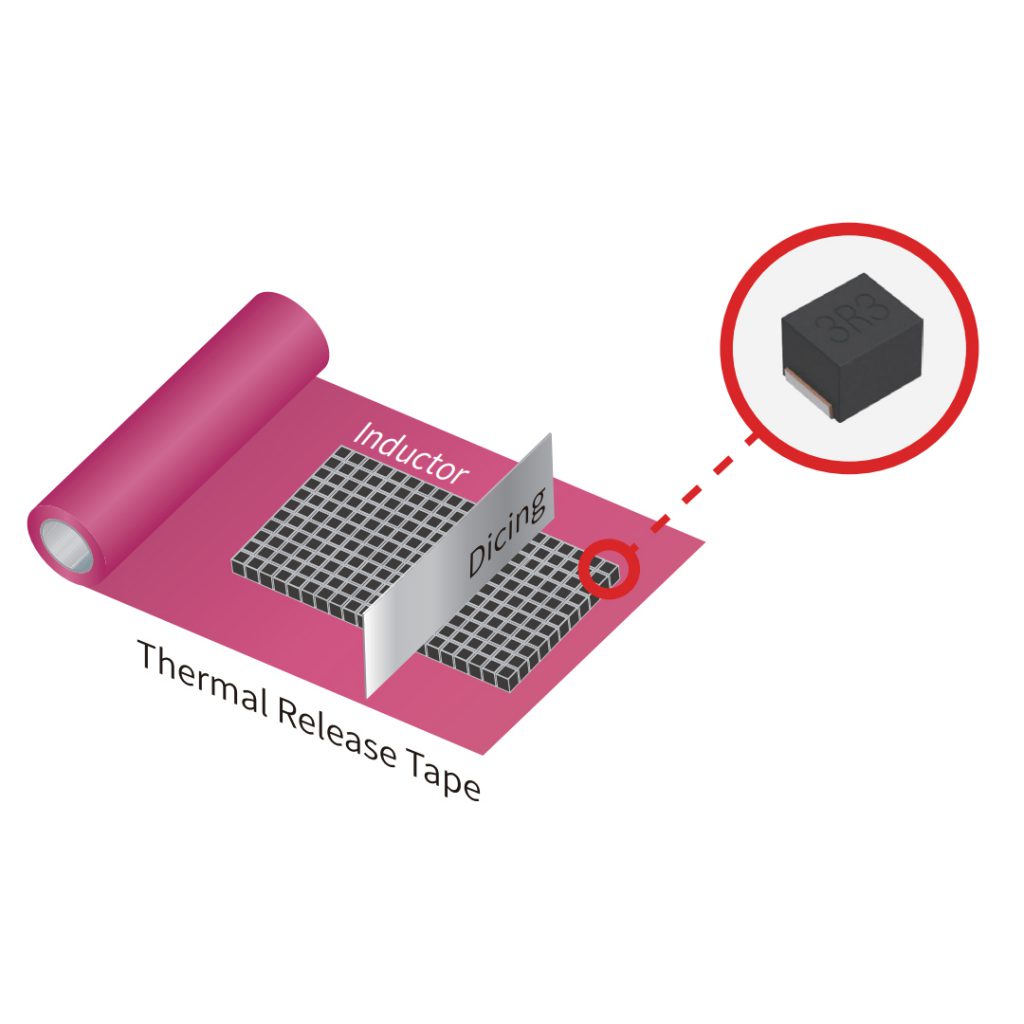
Before cutting, the sapphire substrate is temporarily mounted onto a supporting carrier using an adhesive material.
The carrier helps maintain the position of the substrate during processing.
However, the adhesive must meet two requirements that can appear contradictory.
During cutting, the adhesive needs to hold firmly.
Insufficient adhesion may allow the substrate or individual pieces to shift, vibrate, or detach during processing.
This can affect cutting accuracy and may increase the risk of damage to the cutting blade, workpiece, or surrounding equipment.
After cutting, the adhesive needs to release easily.
If the bonding force remains too high, removing the finished sapphire pieces may require excessive peeling or lifting force.
For thin sapphire components, this can increase the risk of cracking, edge chipping, or damage during handling.
Conventional pressure-sensitive tapes may provide adequate holding force, but their adhesive strength does not necessarily decrease sufficiently during the removal stage.
Thermal release tape is designed to address this issue by providing a controlled change in adhesion after heating.
3. How Thermal Release Tape Works in Sapphire Processing
Thermal release tape is a temporary bonding material with an adhesive system that responds to heat.
At normal operating temperatures, the adhesive provides sufficient bonding strength to hold the sapphire substrate against the carrier.
After processing, the tape is heated to its specified activation conditions.
The adhesive then undergoes a physical change that reduces its effective bonding strength.
Some formulations use heat-expandable microspheres within the adhesive layer. When activated, these microspheres expand and reduce the effective contact area between the adhesive and the bonded surface.
Other thermal release technologies may use different mechanisms.
The result is a reduction in adhesion that allows the sapphire components to be removed with lower mechanical force.
Importantly, thermal release tape should not be confused with ordinary high temperature masking tape.
High temperature masking tape is designed to maintain adhesion under elevated temperatures. Thermal release tape is designed to lose adhesion when its release conditions are reached.
For sapphire cutting applications, this distinction determines whether the material is suitable for the manufacturing process.
4. Application Case: Thermal Release Tape in Sapphire Substrate Cutting
The following case illustrates a representative process for sapphire components temporarily mounted on a carrier during precision cutting.
The actual process should be adjusted according to the substrate thickness, cutting method, carrier material, and tape specifications.
Step 1 — Sapphire Surface Preparation
Before lamination, the sapphire substrate and carrier are inspected for contamination.
Dust particles, oil, moisture, or surface residues may interfere with adhesive contact and create local variations in bonding strength.
For precision sapphire processing, even small particles trapped between the substrate and adhesive can affect flatness and positioning.
The surfaces should therefore be cleaned and dried according to the manufacturer’s approved process.
Step 2 — Temporary Mounting With Thermal Release Tape
A suitable thermal release tape is applied to the carrier or supporting surface.
The sapphire substrate is then laminated onto the tape using controlled pressure.
The objective is to create uniform adhesive contact without introducing excessive stress into the sapphire.
Several factors should be controlled during this stage:
- Lamination pressure and speed.
- Substrate flatness.
- Air bubbles between the sapphire and adhesive.
- Tape thickness uniformity.
- Positioning accuracy.
For thin sapphire substrates, excessive lamination pressure may create unnecessary mechanical loading.
The selected tape must provide sufficient holding force while remaining compatible with the surface characteristics of sapphire.
Step 3 — Precision Sapphire Cutting
Once the substrate is securely mounted, it enters the cutting process.
For blade dicing, the adhesive must withstand mechanical forces generated by the rotating blade, coolant flow, and substrate movement.
For laser cutting, the tape must be evaluated for compatibility with the laser wavelength, energy, cutting path, and associated thermal effects.
Throughout the cutting process, the temporary adhesive support should help prevent unintended movement of the sapphire substrate and separated components.
The objective is to maintain positioning accuracy and support stable processing.
The tape must also remain below its unintended release conditions during this stage.
Premature adhesion loss could allow components to shift before cutting is complete.
Step 4 — Controlled Heat-Activated Release
After cutting, the sapphire components remain temporarily attached to the carrier.
The assembly is transferred to the designated heating stage.
Under controlled thermal conditions, the adhesive reaches its activation temperature and its bonding strength decreases.
The heating process must be sufficiently uniform to produce consistent release across the bonded area.
Once the adhesive has reached the required release condition, the sapphire pieces can be separated using an appropriate handling or pickup method.
Compared with removing a component from a strongly bonded conventional adhesive, the reduced adhesion can lower the mechanical force required for separation.
However, the release temperature, heating time, and removal method must be validated together.
Step 5 — Inspection and Cleaning Evaluation
After release, the sapphire components are inspected for surface contamination and physical damage.
Typical inspection items include adhesive residue, particles, scratches, cracks, edge chipping, and surface discoloration.
For optical-grade sapphire, surface cleanliness is particularly important.
Even small amounts of residue may interfere with subsequent optical coating, bonding, or assembly operations.
A properly selected thermal release tape should support clean separation, but actual residue performance must be verified under the intended process conditions.
5. Key Technical Requirements for Thermal Release Tape in Sapphire Cutting
Not every thermal release tape is suitable for sapphire processing.
The selection process should consider the cutting method, substrate dimensions, release conditions, and downstream cleanliness requirements.
| Technical Parameter | Application Requirement |
|---|---|
| Initial adhesion | Secure fixation during cutting |
| Thermal release temperature | Compatible with the substrate, carrier, and equipment |
| Residual adhesion after heating | Low enough for controlled removal |
| Film thickness uniformity | Supports stable substrate positioning |
| Dimensional stability | Minimizes movement during processing |
| Cutting fluid resistance | Important for wet blade dicing applications |
| Adhesive residue | Must meet downstream cleanliness requirements |
| Particle contamination | Critical for optical and precision applications |
Adhesion Stability During Cutting
The tape must provide sufficient bonding strength to prevent substrate movement during processing.
However, higher initial adhesion is not always better.
Excessive adhesion may create unnecessary release difficulties if the thermal activation process does not reduce the bonding force sufficiently.
The preferred solution provides a balanced relationship between initial adhesion and post-heating release performance.
Temperature Control
The release temperature is a key factor in material selection.
A tape with a relatively low activation temperature may be suitable for processes that require gentle heating, provided that the cutting and handling stages do not accidentally trigger release.
Higher activation temperatures may be appropriate for other applications, depending on the process requirements.
The correct temperature must be selected according to the tape’s technical specifications and the thermal limits of the complete assembly.
Clean Removal Performance
Sapphire components are often used in applications with demanding surface quality requirements.
Adhesive transfer can create additional cleaning steps and may interfere with subsequent manufacturing processes.
For optical-grade components, manufacturers should evaluate residue using inspection methods appropriate to their cleanliness requirements.
6. KHJ Thermal Release Tape Solutions for Sapphire Processing
For sapphire cutting applications, KHJ can support the selection and customization of thermal release tape based on the customer’s processing requirements.
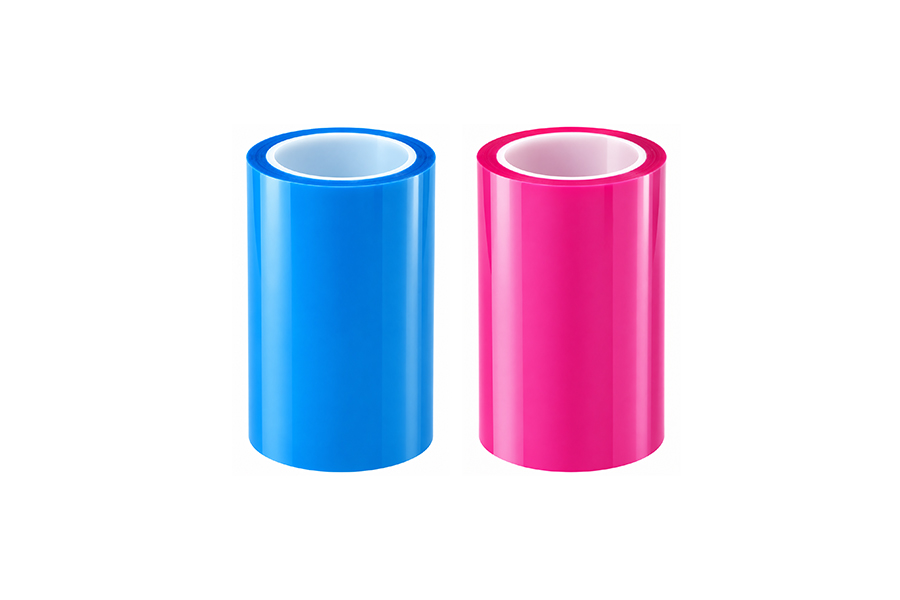
PET-based thermal release tape constructions are among the material options that can be evaluated for temporary bonding applications.
The appropriate solution depends on the cutting method, substrate dimensions, carrier material, and required release behavior.
KHJ’s customization and application support can focus on several areas.
Adhesive Performance Selection
Different applications require different initial adhesion levels and release characteristics. Tape selection should consider the mechanical loads during cutting and the acceptable separation force afterward.
Backing Material and Thickness
PET backing materials can provide useful handling characteristics and dimensional stability. Film thickness and overall tape construction should be matched to the equipment and substrate requirements.
Customized Tape Dimensions
Tape widths, roll lengths, and die-cut formats can be adapted to different carrier designs and manufacturing equipment.
Thermal Release Evaluation
Samples can be evaluated under the customer’s actual heating conditions to assess release behavior and post-heating adhesion.
Cleanliness and Surface Compatibility
Residue and surface compatibility testing can help determine whether the selected tape is suitable for optical-grade or other contamination-sensitive sapphire components.
For manufacturers processing high volumes of sapphire components, consistency between production batches is also an important consideration.
7. Thermal Release Tape vs. UV Release Tape for Sapphire Dicing
Both thermal release tape and UV release tape can be considered for temporary fixation applications, but their release mechanisms are different.
| Feature | Thermal Release Tape | UV Release Tape |
|---|---|---|
| Release mechanism | Heat activation | UV irradiation |
| Equipment requirement | Controlled heating system | Compatible UV exposure system |
| Adhesion before activation | Formulation-dependent | Formulation-dependent |
| Release control | Temperature and heating duration | UV dose and exposure conditions |
| Main compatibility concern | Thermal limits of the assembly | UV transmission and exposure accessibility |
| Typical consideration | Heat-assisted component removal | UV-assisted dicing and die pickup |
Sapphire itself can transmit certain UV wavelengths, but actual UV release performance depends on the wavelength, substrate thickness, surface coatings, carrier construction, and optical path.
Therefore, the choice between thermal release tape and UV release tape should not be based solely on the transparency of sapphire.
For applications where a controlled heating step can be integrated into the process, thermal release tape may offer a practical solution.
Where UV irradiation is readily available and compatible with the materials, UV release tape may be more suitable.
Neither approach should be selected without application testing.
8. Expected Manufacturing Benefits
When properly qualified, thermal release tape can provide several practical advantages in sapphire processing.
Stable Temporary Fixation
Suitable adhesion helps maintain the position of sapphire substrates and cut components during processing.
Lower Mechanical Force During Removal
Heat-activated adhesion reduction can make it easier to separate finished sapphire pieces from the carrier.
Reduced Risk of Handling Damage
Lower removal force may help reduce stress on thin or fragile sapphire components.
Improved Process Repeatability
A defined heating and release procedure can support more consistent component handling.
Potential Reduction in Cleaning and Rework
A properly selected low-residue formulation may reduce the need for additional surface cleaning.
These benefits depend on the complete process design and should be confirmed through production trials rather than assumed from tape specifications alone.
9. Conclusion: Reliable Cutting Starts With the Right Temporary Bonding Material
Sapphire cutting requires precision at every stage, from substrate positioning to final component removal.
Although cutting equipment and process parameters receive much of the attention, temporary bonding materials also influence manufacturing stability and handling quality.
Thermal release tape provides a useful combination of secure initial adhesion and controlled heat-activated release.
For manufacturers working with sapphire wafers, optical components, or precision-cut sapphire substrates, the right tape can help maintain positioning during processing while reducing mechanical stress during removal.
The key is matching the tape’s adhesion characteristics, activation temperature, backing construction, and cleanliness performance to the actual manufacturing process.
KHJ provides industrial adhesive tape solutions for electronics, semiconductor, and precision manufacturing applications, including customizable thermal release tape options.
Looking for Thermal Release Tape for Sapphire Cutting?
Contact KHJ to discuss your sapphire substrate dimensions, cutting method, required adhesion, release temperature, and cleanliness requirements.
Our team can help evaluate suitable tape constructions and sample options for your process.
KHJ — Industrial Adhesive Tape Solutions for Precision Manufacturing
Website: www.khjtech.com
TRENDING POSTS
- * Foam Tape in Smartphone Manufacturing: An Application Case for Bonding, Cushioning, and Sealing
- * SMT Splice Tape in PCB Assembly: A Practical Case for Continuous Component Feeding
- * UV Dicing Tape in Semiconductor Wafer Cutting: Reliable Wafer Holding and Clean Die Release
- * High Temperature Tape for PCB Reflow Soldering: Protecting Critical Areas During SMT Assembly
- * Polyimide Tape in QFN Semiconductor Packaging: An Application Case from the Production Floor
HOT TOPIC
-
772
Acrylic Foam Tape
conductive cloth die cutting
Die-Cut
die cutting tape
Double Sided Foam Tape
EMI shielding gasket
foam die cutting
Foam Tape
graphite die cutting
heat restrant tape
heat sink die cutting
high temperature tape
kapton tape
khj
Labels
LCD buffer pad
LCD shielding
L foam
Non-silicone Polyimide Tape
PCB
PI tape
polyimide tape
polyimide tape,kapton tape
precision die cutting
Reflow soldering masking
SEMICON West
senmiconductor
tape
thermal management
thermal release tape
UV Release Tape
wafer
Wafer cutting